Local SEO Strategies for Small Businesses
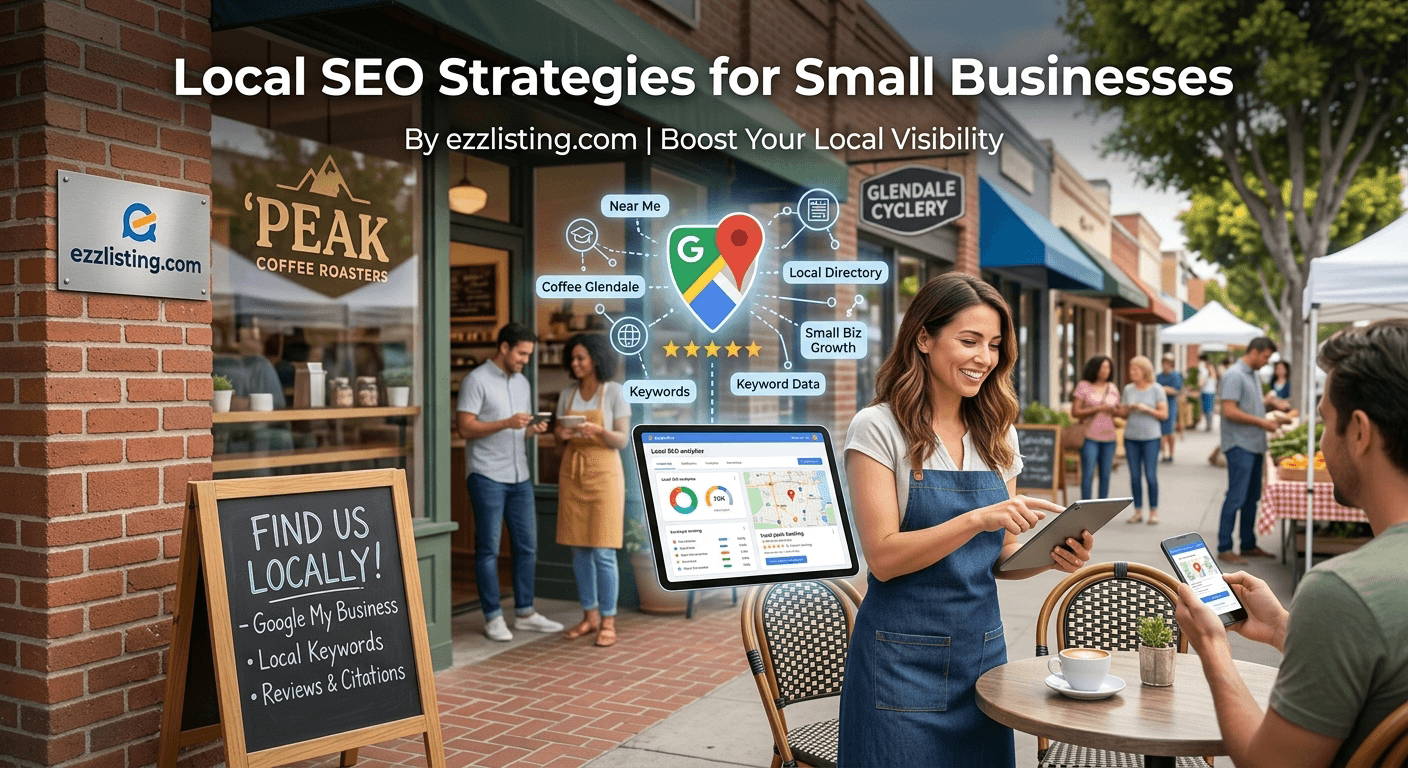
When someone searches "plumber near me" or "best tacos in [city]," they almost always pick from the first few results. Local SEO is how a small business earns one of those spots. It's not about outspending big brands — it's about proving to search engines that you're real, nearby, trusted, and relevant to what the customer wants.
Here are the local SEO strategies that matter most for small businesses, and how to put each one to work.
What is local SEO?
Local SEO is the practice of improving your visibility in location-based searches. It covers the map results, the "near me" results, directory listings, and increasingly the answers AI assistants give when someone asks for a local recommendation.
Search engines mainly weigh three things for local results:
- Relevance — does your business match what the person searched for?
- Distance — are you close to the searcher, or do you serve their area?
- Prominence — how well known and trusted is your business across the web?
Every strategy below improves at least one of these.
1. Claim and complete your Google Business Profile
Your Google Business Profile is the single most important local SEO asset you own. It powers your spot in Google Maps and the local results at the top of search.
- Choose the most accurate primary category, then add secondary categories
- Add your hours, holiday hours, phone, website, and service areas
- Upload real photos of your work, team, storefront, or vehicles
- Write a clear description of what you do and where you do it
- Post updates and offers regularly so the profile looks active
2. Keep your name, address, and phone consistent everywhere
Search engines cross-check your business details across the web. If your name, address, and phone number (often called NAP) look different from site to site, it weakens their confidence in you.
Pick one exact format — including suite numbers, abbreviations, and phone format — and use it on your website, Google profile, social pages, and every directory listing.
3. Get listed in trusted directories
Quality directory listings do two jobs: they put you in front of customers who browse those sites, and they act as citations that confirm your business exists and where it serves.
Focus on directories that are relevant and well maintained rather than hundreds of low-quality ones. A free EZZlisting business listing matches you to customers by the ZIP codes you actually serve and includes a link back to your website. For a full walkthrough, see our free business listing guide.
4. Make reviews part of your routine
Reviews influence both rankings and whether a customer picks you. The businesses with the most reviews usually aren't lucky — they ask.
- Ask right after a job well done, while the customer is happiest
- Make it easy with a direct link or QR code
- Reply to every review, positive or negative, politely and specifically
- Never buy reviews or offer rewards for positive ones — it violates platform rules
5. Build pages for each service and area you serve
A single homepage that says "we do everything, everywhere" is hard to rank. Search engines reward pages that clearly match a specific search.
- Create a page for each main service (e.g. "drain cleaning," "water heater repair")
- If you serve several towns, create genuinely useful service area pages — not copies
with the city name swapped - Use natural wording customers actually search, including your city or neighborhood - Add FAQs, pricing guidance, photos of local jobs, and a clear call to action
On EZZlisting, each service you add gets its own page in Local Services — another way to show up for specific searches. Learn more in how to list your services online.
6. Earn local backlinks
Links from other reputable websites tell search engines your business is trusted. For a small business, the best links are local and relevant:
- Local chambers of commerce and business associations
- Sponsorships of youth teams, charities, or community events
- Local news features and "best of" lists
- Suppliers, partners, and complementary businesses
- Quality directories that link to your site
We cover this in depth in do backlinks still matter for SEO?
7. Get your website's local basics right
Your website doesn't have to be fancy, but it does need to be clear and fast.
- Put your business name, phone, and service area on every page (the footer works well)
- Make your phone number tappable on mobile
- Make sure pages load quickly on a phone
- Add an embedded map and directions if customers visit you
- Use LocalBusiness structured data so search engines can read your details reliably
- Give each page a unique title and description that mentions the service and location
8. Create helpful local content
Content that answers real customer questions brings in searches your service pages can't. Think about what customers ask you every week:
- "How much does [service] cost in [city]?"
- "How often should I [maintenance task]?"
- "What should I do before [your service] arrives?"
- Seasonal guides tied to local weather or events
Helpful answers build trust, earn links, and give search engines and AI tools something concrete to reference.
9. Prepare for AI search
More people now ask AI assistants for local recommendations, and search engines show AI summaries above the regular results. These tools pull from what's written about you across the web.
To improve your chances of being mentioned:
- Keep your details consistent on your profile, website, and directories
- Describe clearly what you do, who you serve, and where
- Collect detailed reviews that mention your services and location
- Publish straightforward FAQ-style content
The fundamentals of local SEO are also the fundamentals of showing up in AI answers.
10. Track what's working
Local SEO takes time, so measure the signals that tie to real customers:
- Calls, direction requests, and website clicks from your Google profile
- Which pages bring in search traffic
- Where new customers say they found you
- Profile views, search appearances, and call clicks on your directory listings
Your EZZlisting dashboard shows profile views, search appearances, and call clicks, so you can see whether the listing is bringing people to you.
Common local SEO mistakes to avoid
- Using a different business name or phone number on different sites
- Creating duplicate listings for the same location
- Stuffing city names into pages until they read unnaturally
- Ignoring or arguing with negative reviews
- Setting up profiles once and never updating hours, photos, or services
- Expecting overnight results — most improvements build over weeks and months
The bottom line
Local SEO rewards businesses that are consistent, active, and genuinely helpful. Complete your profiles, keep your details identical everywhere, ask for reviews, build pages for what you do and where, and earn a few good local links. Do those steadily and you'll show up more often when nearby customers are ready to buy.
Want an easy first step? List your business free on EZZlisting →
Get found by local customers — and earn a free backlink to your site.