Do Backlinks Still Matter in 2026? What Actually Counts Now
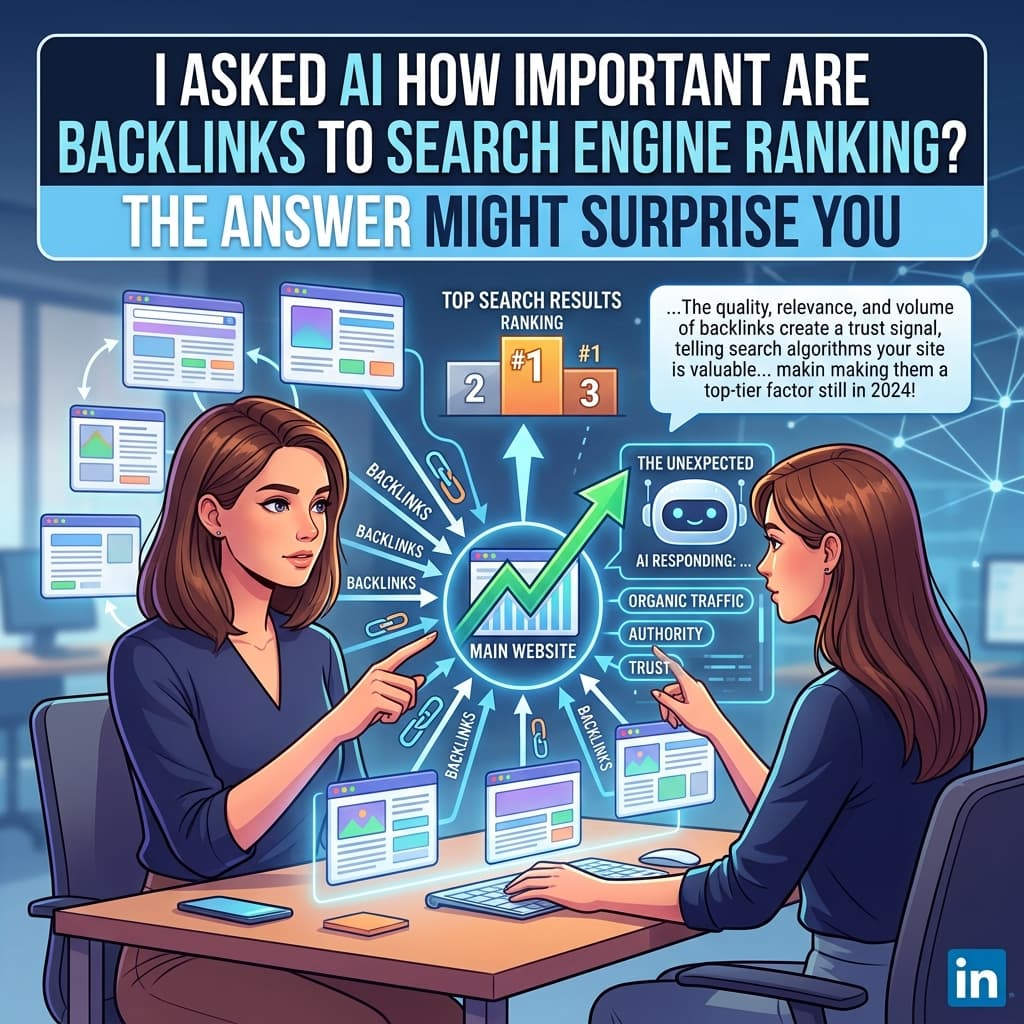
Every couple of years someone announces that backlinks are dead. They aren't. Links are still one of the core ranking signals at Google, Bing, and DuckDuckGo. What changed is the accounting: search engines stopped counting links and started judging them.
Why links still carry weight
A backlink is a third-party vote. Anyone can say their own site is authoritative — a link from someone else's site is the part you can't fake cheaply. That's exactly why search engines have leaned on links for twenty years and still do.
They pass authority and trust. Links from established, relevant sites transfer standing to your domain — the idea PageRank was built on and that its descendants still encode. The signal isn't "this page exists," it's "someone with a reputation was willing to point at it."
They get you found faster. Crawlers discover pages by following links. A new page with nothing pointing at it waits. A new page with a few incoming links gets crawled, indexed, and re-crawled on updates much sooner.
They tell search engines what you're about. The anchor text, the sentence around it, and the topic of the page doing the linking all help pin down your subject matter. A link from a local contractor directory to a roofing company says something specific. A link from a coupon aggregator says nothing.
Quality beats quantity, and it isn't close
Nobody is counting your links. They're weighing them. The difference between a link that helps and a link that's ignored comes down to five things.
Source authority
Helps: well-established, niche-relevant sites, news outlets, educational domains, industry associations. Doesn't: unrelated blogs, low-quality directories, link farms, private blog networks.
Relevance
Helps: placed inside content covering a closely related subject. Doesn't: dropped into generic footers, blog comment spam, or a niche with nothing to do with your business.
Placement
Helps: the main body of the page, in editorial context. Doesn't: site-wide footers, sidebars, automated widget links.
Anchor text
Helps: natural, descriptive, varied phrasing. Doesn't: the same exact-match keyword repeated unnaturally on every link you own.
Link attribute
Helps: standard follow links that pass a direct signal. Doesn't: paid links, or user-generated content marked rel="nofollow", rel="sponsored", or rel="ugc" — which is most forum and comment links by design.
Where links actually decide the outcome
Search engines now weigh hundreds of non-link signals: user engagement, content depth, technical performance, and E-E-A-T — experience, expertise, authoritativeness, trustworthiness. Links didn't get replaced by those. They got joined by them.
High-competition topics. In finance, SaaS, legal, and e-commerce, everyone at the top already has fast pages and solid content. The backlink profile is what's left to separate them. Ranking there without one is close to impossible.
Niche and long-tail topics. For ultra-specific, low-competition queries, genuinely good content and clean technical SEO can rank on their own. Most local businesses live here more than they realize — "emergency roof repair in [your town]" is not a national keyword fight.
Spam doesn't work anymore. Google's SpamBrain and its automated link filters neutralize low-quality and paid links rather than counting them, and patterns that look manipulative can drag a site down. Buying a thousand links is no longer a slow way to win; it's a fast way to waste money.
What to do with this
Stop chasing a number. A handful of relevant, editorial links from sites that actually have standing in your industry will outperform hundreds of directory drops — and unlike the directory drops, they can't be reversed by the next algorithm update.
The practical version for a local business:
- Be listed where your industry is listed. Relevant, real directories still count.
Your EZZlisting listing is one of them, and it's free. 2. Earn mentions locally. Chambers of commerce, suppliers, trade associations, sponsorships, local press. These links are relevant by definition. 3. Give people a reason to link. A genuinely useful page — a pricing guide, a local how-to, real data from your work — earns links without you asking. 4. Vary your anchor text. Let people link the way they'd naturally write. 5. Don't buy links. You're paying for a signal that gets filtered out.
Links are still the part of SEO you can't shortcut. That's not bad news — it's the reason they still mean something.
Get found by local customers — and earn a free backlink to your site.